
Hon. Marty Klyne: Honourable senators, when people think about tourism in Canada, certain destinations tend to come to mind: the Rocky Mountains, Niagara Falls, the coastlines of the Maritimes, the historic streets of Quebec City — and then there’s Saskatchewan.
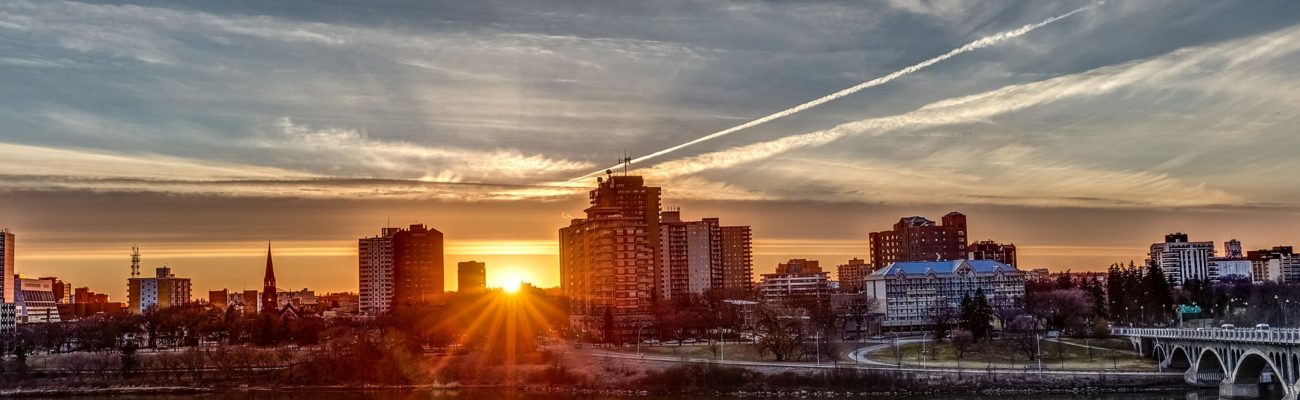
I recognize Saskatchewan may not always be the first destination that springs to mind when Canadians are planning their next great adventure. For some, the first image that comes to mind is a long, straight highway and a great deal of sky; indeed, it’s dubbed “the Land of the Living Skies.” It is a flat land where you can see your dog running away for five days.
While we can certainly fulfill that image, we also have dinosaurs, bison — known as buffalo — world-class fishing, some of the darkest skies in the country, Indigenous cultural experiences, onion-domed Ukrainian churches, underground tunnels with Chicago mob connections, giant roadside attractions — I’ll come around to that — and even a lighthouse. Yes, there is a lighthouse in a landlocked province. We may not have an ocean, but we can boast our fields of grain with rolling, wavelike ripples across crops of wheat, barley and rye.
When I was president of the 2003 Grey Cup, our theme was “Flat-Out in Saskatchewan,” and it was recognized as the best CFL Grey Cup party ever. I can assure you, when it comes to tourism, Saskatchewan is anything but flat; we party flat-out.
Tourism is one of the ways we can tell Canada’s story. It’s about more than destinations. It’s about connecting people to places, history, culture and one another, and in Saskatchewan, those connections are particularly rich.
Let me start with the landscape. We have spent a long time trying to convince people there’s more to Saskatchewan than a flat horizon. We have nearly 100,000 lakes and rivers, forests, wetlands, grasslands, sand dunes, rolling hills and dramatic badlands. We have northern boreal wilderness and wide-open southern prairie, the Saskatchewan River Delta, one of the largest inland freshwater deltas in North America — don’t let Trump know about it — and the Cypress Hills, with their elevated landscapes, tall trees and distinct ecosystems.
We have landscapes that can make you feel very small in a nice way. Prince Albert National Park offers a million-acre gateway to the northern wilderness, where visitors can hike, paddle, camp, swim and encounter free-roaming bison. You don’t want to encounter them too close; they’re a little wild.
Grasslands National Park showcases some of Canada’s most remarkable preserved prairie landscapes, with plains bison, prairie dogs and dark skies. Cypress Hills Interprovincial Park offers forests, grasslands, hiking, fishing and stargazing in a designated Dark-Sky Preserve.
Our dark skies are becoming an attraction in their own right. Astrotourism and glamping offer visitors something increasingly rare: an opportunity to step away from the noise and light of everyday life, experience the night sky and catch a glimpse of the northern lights.
For those who prefer their adventures closer to the water, Saskatchewan is a remarkable fishing destination. Our lakes and rivers are home to 68 fish species, including walleye, northern pike, lake trout, Arctic grayling and rainbow trout. Visitors can enjoy everything from a day on the water close to a city to a remote northern fishing lodge reached by air. There are even world record-sized fish to be found. Several fishing lakes are within a half-hour’s drive of Regina. Stop by my place. I’ll give you something to drink.
Our natural assets are only one part of the story. Saskatchewan’s cultural heritage is another tremendous source of tourism value.
One of the most extraordinary examples is Wanuskewin Heritage Park just outside Saskatoon. For millennia, this site has been a gathering place for Indigenous Peoples of the Northern Plains. Archaeological discoveries offer evidence of thousands of years of human history, including stone tools, pottery fragments and other artifacts. Visitors can explore trails, learn about Indigenous cultures and traditions and observe bison reintroduced as part of a managed herd.
Saskatchewan is home to 74 distinct Indigenous cultures and is the traditional homeland of the Métis people. There are enormous opportunities for Indigenous communities to share their spirituality, connection to the land, stories and traditions with visitors. European, Asian and German visitors, for example, are drawn to Indigenous archaeological exhibits, traditional dance and storytelling demonstrations.
This is tourism at its best, not simply bringing people somewhere but helping them understand something they might otherwise never have encountered.
Our cultural diversity is also reflected in the communities that have shaped Saskatchewan. For instance, in east-central Saskatchewan, an area affectionately known as the “perogy belt,” Ukrainian heritage is visible in the onion domes of the historic churches, local restaurants and traditions that thrive in communities such as Yorkton, Canora and Melville. In the perogy belt, cultural immersion is taken seriously, particularly when it involves a second helping.
The Métis Nation celebrates its culture and history with Back to Batoche Days. Batoche is best known as the site of the Battle of Batoche in 1885, the decisive battle of the North-West Resistance in Saskatchewan. Louis Riel and Gabriel Dumont defended the village against Canadian militia and regular forces.
Across the province, festivals celebrate everything from jazz and theatre to arts and culture. Saskatoon’s Jazz Festival brings hundreds of artists each summer, while its Fringe Festival showcases theatre from around the world.
In Regina, Mosaic — A Festival of Cultures has celebrated cultural diversity for more than 50 years, inviting visitors to travel the world through its vibrant pavilions and collect passport stamps in a special festival pass. Regina is also home to the opera, symphony and Canada’s only permanent professional theatre-in-the-round.
Regina has plenty to offer beyond the arts. Set within Wascana Park, one of North America’s largest urban parks, the Saskatchewan Legislative Building is a destination in its own right. The big dig, which reshaped Wascana Lake and the surrounding parkland and put 22.5 feet of good soil on Todd Lewis’s farm, helped create the beautiful landscape and recreational space that residents and visitors enjoy today.
Regina is also known as the home of the Royal Canadian Mounted Police, or RCMP. Every cadet since 1885 has been trained in Regina at the RCMP Depot Division, a renowned elite police academy. The RCMP Heritage Centre is soon to become a national museum, where visitors can continue to explore the history of the force, including visiting the non-denominational chapel at the RCMP Depot Division, Regina’s oldest building, dating to 1883.
Of course, Saskatchewan is also home to attractions that are difficult to categorize but impossible to forget. There is a giant moose in Moose Jaw. At 10 metres tall, Mac the Moose is apparently the world’s largest moose statue. In Saskatchewan, when we decide to celebrate a moose, we don’t do it modestly.
Visitors can also explore Moose Jaw’s underground tunnels, with connections to Chicago mobsters and Prohibition bootlegging. The tours bring visitors into the world of 1920s and 1930s bootlegging, complete with characters, stories and encounters with the law. It is an opportunity to relive history without, hopefully, being arrested on your way out.
There is the Crooked Bush near Hafford, Saskatchewan — I have to say that I don’t know where that is — where aspen trees twist and corkscrew in ways that have puzzled scientists. UFOs have been ruled out, although I suspect that won’t stop people from asking.
Finally, there is that lighthouse in Cochin. Visitors can climb 153 steps to enjoy the view over the surrounding lakes and prairie landscape.
These attractions may be quirky, but they do make an important point: Every community has something worth sharing. Sometimes it just takes a little imagination to turn that something into a reason to visit.
Agriculture, of course, is central to Saskatchewan’s identity, and, increasingly, it is becoming an important part of our tourism story. I’ll take a quick walk with you, and you can imagine Todd Lewis walking with us.
The Canadian Western Agribition is an annual agricultural trade show and Canada’s largest livestock exhibition, held each November at the REAL District in Regina. It attracts over 150,000 visitors yearly.
Regina also hosts Canada’s Farm Show, a major agricultural trade event showcasing dryland farming equipment, agricultural technology, education and international trade. It attracts more than 20,000 visitors annually, with attendance reaching over 40,000 in peak years.
Agriculture in Saskatchewan is not just about trade shows and industry; it is also an opportunity for visitors to experience rural life first-hand. The Field to Fork Agritourism Corridor, developed through Destination Canada’s Tourism Corridor Strategy Program, brings together communities, farming towns, Indigenous communities and rural producers across Saskatchewan and Manitoba. Through the corridor, visitors can enjoy farm-to-table dining, agricultural festivals, wineries, homesteads and local food producers. These experiences connect visitors with the people and places behind the food we grow, while creating additional income for farms and small businesses.
Tourism benefits do not have to be concentrated in our largest cities or most famous destinations. They can support local entrepreneurs, encourage investment and help sustain the vitality of rural Canada, while celebrating the distinct character of individual communities.
Saskatchewan has also received national recognition. At the 2025 Canadian Tourism Awards, four Saskatchewan businesses and attractions received top honours: Dakota Dunes Resort received the Tourism Employer of the Year Award; Wanuskewin Heritage Park, the Indigenous Tourism Award; Ag in Motion, the Business Event of the Year Award; and Field to Shield, the Culinary Tourism Experience Award. These awards reflect the diversity of our tourism sector, from Indigenous and culinary tourism to business events and outdoor recreation.
We are also working to attract international visitors. A daily direct flight between Regina and Denver has been very good and has been working for us. Tourism Saskatchewan is targeting visitors interested in the experiences we do particularly well, such as birding — you can let the Honourable Diane Griffin know about that — angling and hunting, astrotourism and glamping, wildlife photography and Indigenous tourism.
As I said, tourism does more than support economies and preserve heritage. It brings Canadians closer together. In a country as vast as ours, it allows people to experience communities, cultures and landscapes they might not have otherwise encountered. Those connections strengthen our sense of belonging and remind us that our national identity is enriched by the distinct histories and cultures of our regions.
Saskatchewan may not always be the first place people think of when planning a Canadian vacation, but perhaps that is part of our opportunity. You can spend the morning learning about thousands of years of Indigenous history, the afternoon exploring landscapes shaped by glaciers and the evening taking in spectacular northern lights. You can also spend a few days fishing and enjoying shore lunches with your guides on the shore. Honourable senators, I invite you to come and see for yourselves.
Thank you. Hiy kitatamihin.
Hon. Senators: Hear, hear.