
Hon. Judy A. White: Honourable senators, I rise today to participate in the inquiry on the nation-building value of tourism, and I want to acknowledge the leadership of my colleague and friend Senator Sorensen in initiating this important conversation about one of Canada’s most powerful forces for connection and economic growth.
Tourism is a major aspect of Canada’s economy and a vital way of sharing and preserving our culture and history. It is a way of bringing people together and celebrating the immense natural beauty that Canada has to offer.
I would like to focus my remarks today on tourism in my home province of Newfoundland Labrador. Our stunning coastlines, sea life, historic sites and many parks make Newfoundland and Labrador a popular and beloved tourist destination.
I will begin by sharing some statistics about the vital role of tourism in my province. I will then highlight some of the most popular places that draw tourists, from the coastline of the farthest easterly point in North America to the Tablelands on the west coast of the island, to the spectacular mountains of Labrador. I will then conclude by sharing a little about Indigenous tourism and the work of the Newfoundland & Labrador Indigenous Tourism Association, which showcases Indigenous-owned businesses in the tourism sector.
Tourism in Newfoundland and Labrador has grown significantly over the past 15 years. While travellers most often visit our province for its beautiful scenery, landscapes and coastline, Tourism Newfoundland and Labrador found that 30% of visitors in 2023 said visiting Newfoundland and Labrador was on their bucket list. Visitors also come to experience our culture and history, go hiking, see icebergs and wildlife and visit our natural parks. In fact, it is perhaps no surprise that so many people return again and again.
Newfoundlanders and Labradorians have a reputation for making people feel at home. Many visitors arrive for a week’s vacation, leaving after being invited to several kitchen parties, a shed party — if you’re lucky — and after practically being adopted by a local family.
Tourists in Newfoundland and Labrador have exceptionally high satisfaction rates, with 87% saying they would return and 93% saying they would recommend the province to others. Tourism is also critical to our economy. In 2025, visitor spending reached a record $625.6 million.
So what attracts so many visitors to our province? Newfoundland and Labrador has more than 30 provincial parks, 4 national parks and dozens of provincial and federal historic sites. People come to enjoy nature reserves; see puffins, whales and icebergs; or explore the 336 kilometres of the East Coast Trail. We are one of the few places where visitors can spend the morning watching whales, the afternoon admiring icebergs, and the evening wondering why they didn’t pack a heavier coat.
You can also take the East Coast Trail to Cape Spear, the easternmost point in North America. Standing there at sunrise, you can be the first person on the continent to greet a new day.
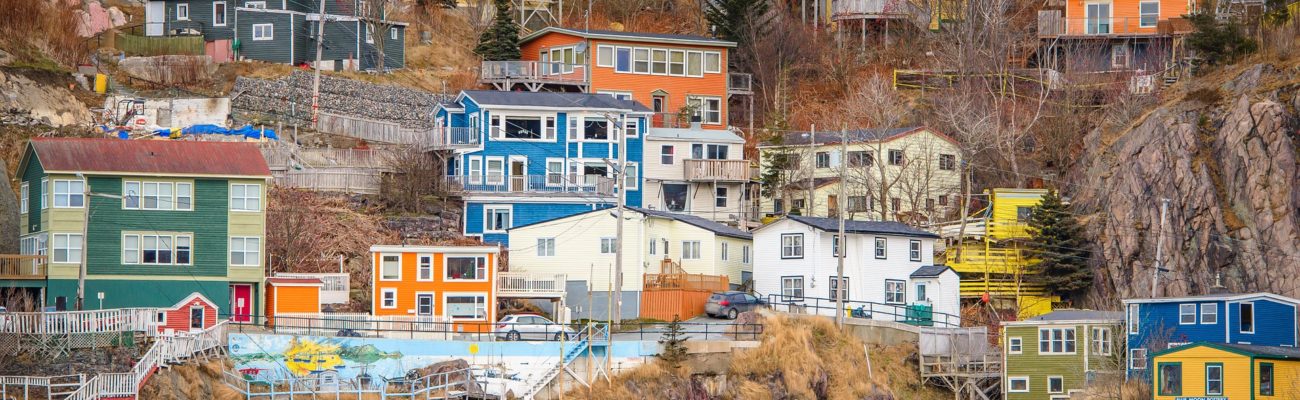
The capital city of St. John’s attracts the largest number of visitors each season. I live on the coast with the most, opposite of this one. Visitors enjoy The Rooms, Signal Hill, the colourful Jellybean Row houses, local restaurants and a vibrant arts and music scene. The city is also home to beloved festivals such as the Royal St. John’s Regatta, the Mummers Festival and the George Street Festival — not to be missed.
On the west coast of the island, Gros Morne National Park is both a world-famous park and a UNESCO World Heritage Site. It is home to the Tablelands, one of the few places on earth where you can walk on rock from the earth’s mantle. As a Newfoundlander and Labradorian, I must acknowledge that we also have a story that NASA tested a Mars rover there because the landscape looked like Mars. It’s just a story. It’s not true, but I always thought that if any place in Canada could convince visitors that they had landed on another planet, it would definitely be the Tablelands. Scientists from both NASA and the Canadian Space Agency — this is true — have nevertheless studied the area because of its unique geological features.
Gros Morne is also home to the Western Brook Pond fjord, a spectacular freshwater fjord carved by glaciers during the last ice age. The nearby trail has recently been made universally accessible, ensuring more Canadians can enjoy one of our province’s most breathtaking natural wonders. Further north is L’Anse aux Meadows, the only authenticated 11th-century Norse settlement in North America and another UNESCO World Heritage Site.
Moving on over to beautiful Labrador, we have the Torngat Mountains National Park, the homeland of Inuit, who have lived in the region for millennia. Parks Canada describes the area as a landscape of dramatic peaks, glacier-carved fjords and iceberg-filled waters.
We often joke that in Newfoundland and Labrador you can experience all four seasons in a single day. That is absolutely true, but no matter what the season is, the scenery is always worth it.
I would like to conclude by recognizing the many ways Indigenous people contribute to the tourism industry in Newfoundland Labrador. There are Indigenous-owned businesses across the province, offering everything from boat tours and accommodations to restaurants, cultural experiences, arts, festivals, museums and outdoor adventures. Visitors also have the opportunity to experience vibrant Indigenous cultural celebrations that have become highlights of the summer tourism season.
On the first weekend of July, Miawpukek First Nation in Conne River hosts its annual powwow, welcoming people from the province and beyond. It is a time of celebration, sharing and cultural pride, where visitors can experience traditional drumming, dancing, teachings and the warmth of Mi’kmaq hospitality.
The following weekend, the second weekend of July, a similar spirit comes alive in my home community of Flat Bay, where the Bay St. George Mi’kmaq Cultural Revival Committee hosts its annual powwow. For many of us, it is more than an event. It is a gathering of family and friends, a place where our community shares knowledge, where young people connect with their culture, and where visitors are welcomed as guests and leave as friends.
I have always appreciated seeing people from every background come together at these gatherings. Whether they arrive knowing a great deal about Mi’kmaq culture or are experiencing a powwow for the very first time, they leave with a deeper understanding of who we are as a people and the values that continue to guide our communities.
These powwows showcase living Mi’kmaq cultures while creating meaningful opportunities for cultural tourism. They remind us that some of the most memorable travel experiences are not found in landmarks or attractions but in the connections we make with one another. Indigenous tourism offers this. It offers us an opportunity not only to see our province but to better understand the people, histories and cultures that have shaped it for generations.
Colleagues, in conclusion, Newfoundland and Labrador has a rich history, extraordinary natural beauty and a thriving Indigenous tourism sector. Beyond its economic impact, tourism brings people together and creates lasting connections between communities, cultures and regions. Tourism is one of the few industries where people willingly travel thousands of kilometres, brave our wind, fog and occasional sideways rain, and then tell their friends they cannot wait to come back. That says something special about Newfoundland and Labrador, and certainly to the visitors who come.
Tourism helps preserve and shape our culture, our stories and our heritage. It builds understanding and appreciation for the places and peoples that make Canada unique. For many reasons, tourism has tremendous nation-building value, and nowhere is that more evident than in my province of Newfoundland and Labrador.
Wela’lioq, thank you.