
Hon. Brian Francis: Honourable senators, as some of you may know, the Senate of Canada curates a collection of more than 6,000 works of art, ceremonial objects and heritage pieces. This sprawling collection helps us remember and honour the important people and events that have played a central role in shaping our country.
Today, I want to spotlight the bronze portrait bust of the Honourable James Gladstone, who made history when he became the very first First Nations senator. This year marks 25 years since this statue was first unveiled and 55 years since Senator Gladstone died.
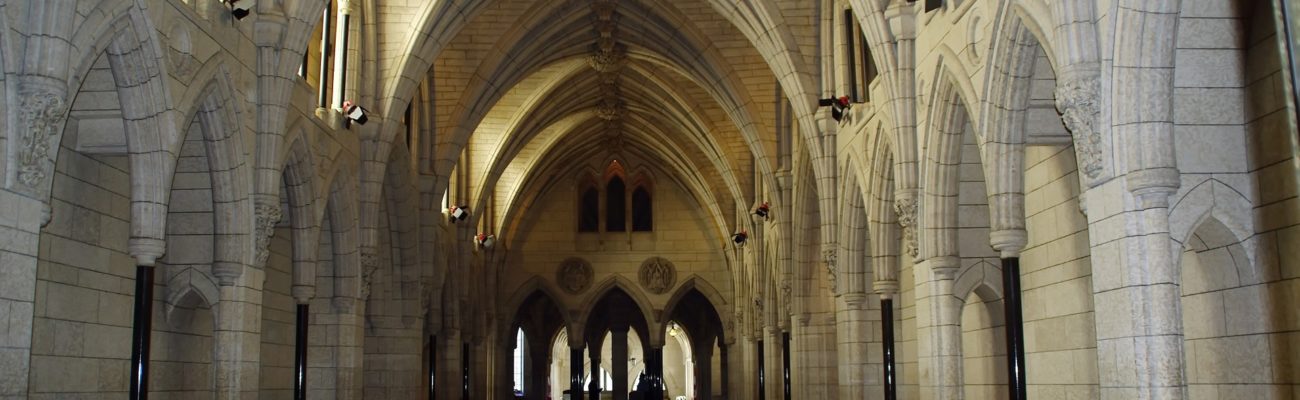
To mark these significant milestones, the bust was recently moved from the Senate’s antechamber to the building entrance for all to see. I would like to thank the Artwork and Heritage Advisory Working Group for leading this important initiative, including Chair, Senator Cardozo, and members, Senators Ataullahjan, Black, Cormier and Karetak-Lindell.
Born in 1887, James Gladstone was connected to the Blood Tribe, or Kainai Nation, part of the Blackfoot Confederacy. There he attended the Anglican St. Paul’s Residential School and later St. Dunstan’s Industrial School near Calgary. He later returned to the Blood Tribe, where he married and raised a family.
Yet, despite his lifelong ties, it was not until 1920, after a decade-long battle, that Gladstone was formally adopted by the Blood Tribe and granted Indian status.
In a striking irony, when Prime Minister Diefenbaker appointed him to the Senate in 1958, First Nations with Indian status such as himself still did not have an unconditional right to vote in federal elections. Senator Gladstone helped secure that right two years later, a long and hard-fought battle that paved the way for a more equitable and inclusive democracy in Canada.
Over the course of his 13-year tenure in the Senate, Senator Gladstone continued to be an advocate for Indigenous Peoples, serving on the then Joint Committee on Indian Affairs and others.
Colleagues, the commemorative bust now stands proudly in the foyer, amongst English and French monarchical artwork and flags, displaying full Blackfoot ceremonial regalia. Sculpted by Rosemary Breault-Landry, it masterfully captures the quiet authority yet gentle demeanour of Senator Gladstone.
I am proud to follow in the footsteps of Senator Gladstone and other Indigenous trailblazers, and I look forward to more people having an opportunity to learn more about his life and legacy. May he continue to remind us of how far we have come, but also of the work that remains to secure a brighter future for all in Canada.
Wela’lin, thank you.